 The Vivo iQOO that was leaked earlier turns out to be a gaming sub-brand. Vivo announced a gaming smartphone with the specs maxed out. We’re talking a Qualcomm Snapdragon 855, 44W fast charging and a triple camera setup. Add to that 12GB of RAM and up to 256 GB of storage, it’s Vivo’s most powerful smartphone yet. The Vivo iQOO launched in China and looks every bit a gaming phone. There’s a 6.41-inch OLED display with a waterdrop notch. It also won’t be a Vivo flagship without a under-display fingerprint sensor. The smartphone’s gaming chops include pressure sensitive buttons on the side that can be used while playing games. There’s a Halo light strip on the back that lights up when you cross a milestone. It’s als liquid cooled using a vapour chamber. On the software side, there’s AI Turbo, Center Turbo, Net Turbo, Cooling Turbo, and Game Turbo. All of them can be turned on with Multi-Turbo, which Vivo claimed boosts app startup by 30 percent and frame-rate by 70 percent. The Multi-Turbo mode also automatically switches between Wi-Fi and 4G when gaming. The iQOO also has something good to offer for photographers. There’s a triple-camera setup on the back that houses a 13MP wide-angle lens with Sony IMX263 sensor along with a 12MP Sony IMX363 primary shooter with dual-pixel technology and a 2MP depth sensor. The waterdrop notch has a 12MP camera for selfies. The Vivo iQOO launched in Electric Blue and Lava Orange variants which starts at CNY 2,998 (roughly Rs 31,000) for the 6/128GB configuration, CNY 3,298 (roughly Rs 34,000) for the 8/256GB variant and CNY 4,298 (roughly Rs 45,000) for the 12GB/256GB variant. The first flash sale is scheduled for March 6 at 10AM in China. Related Reads: Vivo iQoo's first smartphone set to launch on March 1 featuring 12GB RAM, Snapdragon 855 Platform
from Latest Technology News https://ift.tt/2HalEyW

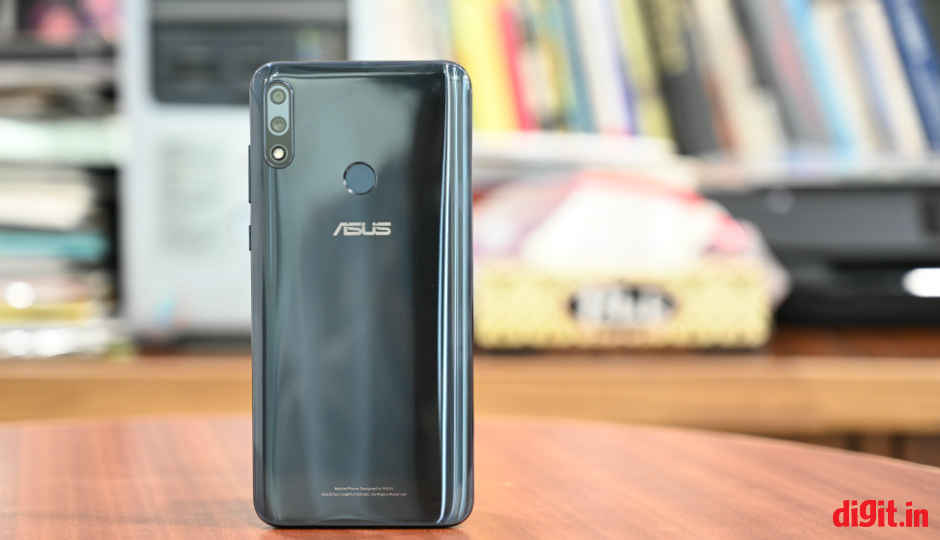 Highlights: Asus revised the prices of its flagship, mid-range and budget Android devices. The price cuts come after Samsung introduced a range of mid-range and budget smartphones in the new Galaxy M series. The price cuts already reflect on Flipkart and will be permanent. Asus has slashed prices of its entire 2018 smartphone lineup including the Asus Zenfone 5Z, Zenfone Max Pro M1, Zenfone Max Pro M2 and Zenfone Max M2. After the price cut, the Asus Zenfone Max Pro M1 will start from Rs 8,499, Rs 500 lower than the Rs 9,999 starting price. The Zenfone Max Pro M2 also got a big price cut of Rs 3,000 and will now be available from Rs 9,999. The flagship Asus Zenfone 5Z which launched at Rs 29,999 will now be available from Rs 24,999. Finally, the Asus Zenfone Max M2, the company’s budget Android will also be available from Rs 8,499, down from the launch price of Rs 9,999. The price cuts come in the face of Samsung launching a range of mid-range devices including the Samsung Galaxy M10, Galaxy M20 and the Galaxy M30, all under Rs 15,000. The price-cut could also be a reaction to the launch of the Xiaomi Redmi Note 7 Pro that launched at Rs 13,999 and comes with a 48MP camera on the back. The 3GBRAM/32GB storage variant of the Asus Zenfone Max Pro M1 will now be selling for Rs 8,499 while the 4GB/64GB variant will retail for Rs 10,499. The 6GB RAM variant of the phone will be sold at Rs 12,499. The successor to the phone, the Zenfone Max Pro M2 also received a big price-cut. The base variant with 3GB RAM and 32GB stroage will be available for Rs 9,999 while the 4GB/64GB variant will come for Rs 11,999. Finally, the variant with 6GB RAM and 64GB storage will come for Rs 13,999. The budget Asus Zenfone Max M2 with 3GB RAM and 32GB storage will come for Rs 8,499 while the 4GB RAM variant with 64GB storage will retail for Rs 10,499. The flagship Asus Zenfone 5Z with 6GB RAM and 64GB storage will now retail for Rs 24,999 while the 128GB variant will come for Rs 27,999. There’s also the 8GB RAM with 256GB storage that will sell for Rs 31,999. The phones are already available at Flipkart with the slashed prices. The price cuts are permanent and will not be revised later. Related Reads: Asus ROG Phone, ZenFone Max Pro M1, Max Pro M2 and more Asus phones listed to receive Android 9 Pie update in 2019
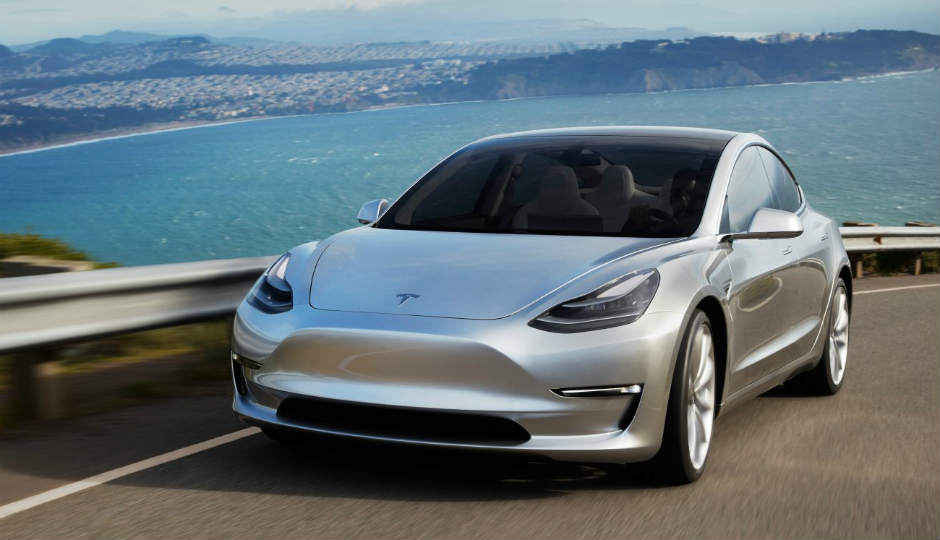 Highlights: The Tesla Model 3 gets a new low-end variant in the US It costs $35,000 (Rs 25 lakh approx) Tesla’s Model 3 has a new entry-level variant in the US and it costs $35,000 (Rs 25 lakh approx). Through a blog post, Tesla announced that the new much-awaited Standard Model 3 would have a range of 220 miles (354 kilometres), a top speed of 130 miles per hour (209 kilometres per hour), and take 5.6 seconds to go from 0–60 miles per hour (0–100 kilometres per hour). In addition, Tesla announced a Standard Range Plus variant for $37,000 (Rs 26 lakh), which increases the car’s range by 20 miles (32 kilometres). “To achieve these prices while remaining financially sustainable, Tesla is shifting sales worldwide to online only. You can now buy a Tesla in North America via your phone in about 1 minute, and that capability will soon be extended worldwide. We are also making it much easier to try out and return a Tesla, so that a test drive prior to purchase isn’t needed. You can now return a car within 7 days or 1,000 miles for a full refund. Quite literally, you could buy a Tesla, drive several hundred miles for a weekend road trip with friends and then return it for free,” writes Tesla confidently in its blog. The Model 3 was originally announced in 2008 but finally went on sale in the US in 2017. The Elon Musk-owned company sells the Model 3 as a compact four-door electric sedan. The new Standard variant is powered by a 50 kWh battery that supports both AC and DC charging. The car’s 18-inch rear wheels are powered by a single electric motor. The Model 3 uses Tesla’s proprietary Autopilot software, which is capable of navigating the car automatically in some situations. In addition, the car is capable of parking itself automatically. Aside from the Model 3, Tesla is planning to build an electric SUV called Model Y in Shanghai and launch it in 2020. While introducing the Model 3 is perhaps Tesla’s best bet if it decides to set up shop in India, there’s no definite information on whether it will happen yet. Though the Model 3 costs a reasonable $35,000 (Rs 25 lakh) in the US, it won’t cost the same if it is imported to India. We’ll just have to wait and see if Tesla is considering India as a serious market for the sale of its electric car range. Related Read: Porsche Macan to go fully electric
 Highlights: OnePlus 3, 3T users will have to wait longer for their Android Pie update The Pie update will be preceded by an Oreo security patch While owners of more recent OnePlus devices are enjoying their share of the Pie, owners of the OnePlus 3 and 3T are still left holding the crumbles of Oreo. When Android Pie was announced last year, OnePlus had promised to roll the update out to the OnePlus 5, 5T, 3, and 3T but hadn’t mention exactly when. When the new year was born the OnePlus 5 and 5T got their Android Pie update, leaving only two devices in OnePlus’ stable to be updated. Two months on, the OnePlus 3 and 3T are still waiting for their slice of the Pie. Addressing questions about the Android Pie update is OnePlus Community Manager David Y., who, on the OnePlus Forum wrote recently, “The next update will be a security patch update based on Android O, then Android Pie.” What this means is that owners of the OnePlus 3 and 3T will have to wait a little longer for their Android 9 Pie update. David Y. also added jokingly in the post, “Can't you guys just go and do something more meaningful than chasing the update...(facepalm)”. Although OnePlus had started rolling the Android Pie update out to the OnePlus 5 and 5T around Christmastime, both phones ended up getting the update only a week or so into the new year. In some regions, the update roll out was cancelled so a newer update bearing an important hot fix could be sent out instead. While the OnePlus 5T got Android Pie’s pill-based navigation features, the OnePlus 5 didn’t. The OnePlus 3 and 3T were launched globally in 2016. The OnePlus 3 is powered by a Qualcomm Snapdragon 820 chipset while the OnePlus 3T is powered by an updated Qualcomm Snapdragon 821 chipset. Both handsets have 6GB of RAM on board. Android Pie will be the phones’ second major system update, with the first being Android Oreo. With any luck, the OnePlus 3 and 3T should receive their long-awaited update within a couple of months. Related Read: OnePlus 5, 5T receiving OxygenOS 9.0.2 Hot Fix
 Highlights: Oppo R17 Pro gets a significant price cut Its new price is Rs 39,990 on Amazon.in If you’re looking to buy a large-screen phone from Oppo, you’re in luck. The price of the Oppo R17 Pro has been cut by Rs 6,000. The smartphone is now available on Amazon.in at Rs 39,990. The same price cut should reflect in the price tags of the smartphone across the country, even in offline stores. The significant price reduction comes just three months after its launch in India. The Oppo R17 Pro is available in Emerald Green and Radiant Mist colours. The Oppo R17 Pro is powered by a Qualcomm Snapdragon 710 chipset (Dual 2.2GHz Kryo 360 + Hexa 1.7GHz Kryo 360 CPUs) and is accompanied by an Adreno 616 GPU. The RAM onboard is 8GB and the storage available is 128GB. The battery on the Oppo R17 Pro is a 3,700mAh unit and the handset is equipped with the company’s proprietary SuperVOOC Flash Charge technology, which facilitates 50-watt charging. Oppo claims it can charge gain 40 percent of its total charge in ten minutes. The Oppo R17 Pro has a 6.4-inch Full HD+ AMOLED display with a resolution of 2340 x 1080 pixels and an aspect ratio of 19:9. There’s a waterdrop notch on top of the display, which houses the selfie camera. Oppo claims the phone has a 91.5-percent screen-to-body ratio. The display panel is protected by Corning Gorilla Glass 6. Under the display is a hidden fingerprint sensor, which Oppo says, can unlock the device in 0.41 seconds. In the optics department, we see a triple camera setup on the Oppo R17 Pro. There’s a 12-megapixel camera with an f/1.5-f/2.4 “Smart Aperture”, a 20-megapixel camera with f/2.6 aperture and a 3D-sensing camera. The camera system supports optical image stabilisation. The Oppo R17 Pro runs ColorOS 5.2, which is based on Android 8 Oreo. The new price cut should give the Oppo R17 Pro a new lease of life, though it’s shocking to see such deep slashes this early into the model’s life. Related Read: Oppo Find X 5G model showcased in China


