 Highlights: You can now click a photo and directly add data to Excel spreadsheet Microsoft has also introduced a new Office app for Windows 10 The company also rolled out some other security enhancements Microsoft has now rolled out a feature that will let users enter data in an Excel spreadsheet by just clicking a photo of their document. Users can now use the Excel app on their android phones to take a picture of a printed data table and using AI capabilities, the app will automatically convert the picture into a fully editable table in Excel. This image recognition functionality essentially eliminates hard work of manually entering hardcopy data. The company has also announced that the iOS support will come soon. The feature, called Insert Data from Picture, was announced at Microsoft Ignite annual conference in September last year. Along with this, Microsoft has also rolled out a feature that will let users quickly add photos and files to tasks in Microsoft To-Do. “Attach files and photos to help make tasks more actionable with added context. This highly requested feature is now available on all platforms and syncs across your devices,” Microsoft said. The availability of these feature come along with other security enhancements that, Microsoft says, will help users “stay ahead of threats, create a more productive workplace, and keep you in the flow of work.” The updates include advancements in Microsoft Threat Experts, Desktop App Assure and Microsoft FastTrack and Office app for Windows 10. Starting this month, the Teams desktop app will be installed along with the rest of the Office 365 ProPlus apps for all new installs. As mentioned above, there is a new Microsoft Office app for Windows 10. Anyone who signs in with a work, school, or personal Microsoft Account can use it to quickly access all the apps available to them and their most relevant files and documents. “Organisations can also take advantage of the ability to integrate third-party apps, enable users to search for documents and people across the organization, and customize the experience with their own branding,” Microsoft said. (The Office app can be downloaded from the Microsoft Store, requires a current version of Windows 10, and works with any Office 365 subscription, Office 2019, Office 2016, and Office.) Related Read: Windows 7 support to end in a year, Microsoft says
from Latest Technology News https://ift.tt/2Tf7kwf

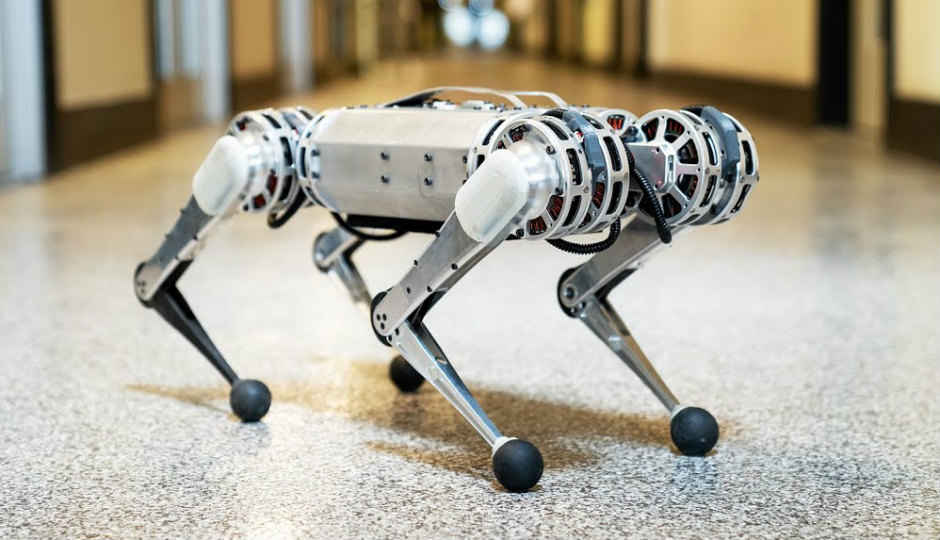 Highlights: MIT’s Mini Cheetah robot is now capable of performing backflips. The new robot can also rebalance itself and automatically get up if it falls. With all the new developments happening in various aspects of science, the future does seem exciting. Adding to the list of growing achievements, MIT has unveiled a new smaller version of its Cheetah 3 robot called the Mini Cheetah. While backflip-performing robots are not a new thing, the Mini Cheetah is claimed to be the first four legged robot that can do the trick. However, doing backflips is not the only thing it has been taught. The quadruped robot weighs around 9 kg and can trot at 2.5m/s under half its actuator torque and speed, meaning it can go even faster if required. The Mini Cheetah can also trot, run, and move sideways. It can also perform independent translation and rotation, which looks like the bot is chasing its own non-existent tail without tripping up. The video shows that the quad-legged robot is also adept at regaining its balance when someone tries to kick it, and it can also get up by itself if it falls down. The clip instantly reminded us of Black Mirror. It should be noted that unlike the Boston Dynamics’ SpotMini that is meant for commercial use, the Mini Cheetah is a research project and won’t be seen chasing someone down the street. As seen from the video above, Mini Cheetah can easily navigate through uneven terrain. We have seen some other robots that can also do the same but feature a different design. For example, there's a snake-like robot created under a joint project between researchers at the Kyoto University Mechatronics Lab and the University of Electro-Communications in Japan. The flexible bot, capable of climbing ladders, could be helpful in rescue operations for scaling obstacles and navigating through terrains where humans can’t reach easily. The robot makes use of a gait design method that enables it to climb by connecting simple shapes. While there are many robots that draw inspiration from nature, Boston Dynamics’ Atlas humanoid robot has also been updated quite a few times, to such an extent that it can perform parkour. The robot was previously seen in a video where it jumped over logs and climbed steps without breaking its pace. Related Reads: Researchers develop snake-like robot that can climb ladders Boston Dynamic's Atlas can now perform Parkour
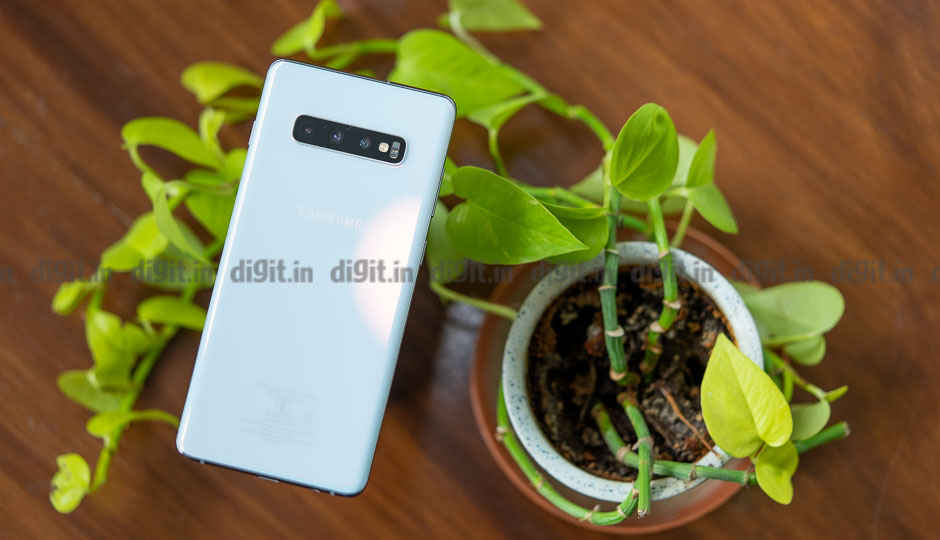 Highlights: Samsung Galaxy S10 passes durability test Ultrasonic sensor fails to recognise fingerprint if display screen is broken A glass screen protector renders ultrasonic sensor tech useless Samsung Galaxy S10 and Galaxy S10 Plus have got some industry-features, and one of them is the under-display fingerprint sensor. This scanner is an ultrasonic sensor that uses sound waves to read fingerprints and map the peaks and valleys on a fingerprint to authenticate the user. Since a lot is not known about the technology’s working in real life conditions, YouTuber Zack Nelson, who tests phones' durability on his videos under “JerryRigEverything”, gives a hint on how and where a user could face problems with this tech. According to his latest video, the sensor works with minor scratches but fails to recognise the fingerprint if display glass breaks. The video shows the Samsung Galaxy S10 Plus passing the bend test, meaning that the phone is durable enough to withhold bends. The other major focus area is the ultrasonic fingerprint sensor. After removing the pre-installed screen protector, he puts a lot of usual scratches on the part of the display that has the reader, and confirms that the sensor works. These scratches are way more than those people typically incur during real life usage. Watch the video below. In the next step, he puts in deep scratches which simulate the cracks in a screen. After inflicting deep cuts, he finds that the sensor does not respond to the fingerprint and fails to work. This essentially means that if a user breaks the glass of the phone, he won’t be able to use the under-display sensor on the Galaxy S10 or the Galaxy S10 Plus. Nelson also shows a small clip comparing the optical fingerprint sensor testing video shot by YouTuber Marques Brownlee, popularly known as MKBHD. Brownlee has also uploaded a video showing the cases where the ultrasonic sensor will and will not work. In his test, he showed that the sensor will work perfectly if a user’s thumb is wet. Those using a regular screen protector will also be able to unlock the phone easily. However, those users who go for a glass screen protector, widely known as tempered glass, will not be able to use the ultrasonic sensor rendering the technology useless for them. You can watch the video below. Related Read: Samsung Galaxy S10e vs Galaxy S10 vs Galaxy S10+ : What's the difference?


